Saturday, 7 July 2012

Suzuki Accessories

Suzuki Accessories

Suzuki had a quite large broadcasting career. His career started in 1979, where he hosted
"The Nature of Things" which aired around fifty countries worldwide. Suzuki also hosted a television series called "The Secret of Life". He also won an award, the United Nations Environment Program Medal in 1985 for his hit television series "A Planet for the Taking".Suzuki also did a four hour mini-series called "The Sacred Balance" which aired in 2001.Suzuki has won many honours and awards these include, Canada’s most prestigious award, the Order of Canada Officer which he won in 1976 it has been upgraded to Companion status in 2006, he was awarded the UNESCO’s Kalinga Prize for science 1986 and the Order of British Columbia in 1995 as well as numerous other Canadian and international honours. Suzuki was nominated as one of the top 10 "Greatest Canadians" by viewers of the Canadian Broadcasting Corporation.Suzuki is also a co-founder of the David Suzuki Foundation. The Foundation was officially opened in 1991. The Foundation mainly concentrates on environmental issues including, aquaculture, biodiversity, climate change, global warming, ecosystem-based forestry, and sustainable fisheries.

Suzuki Accessories
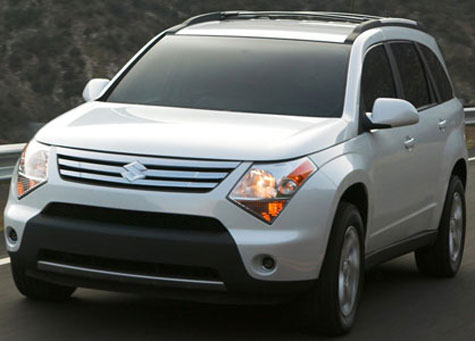
Suzuki Accessories

Suzuki Accessories

Suzuki Accessories

Suzuki Accessories

Suzuki Accessories

Suzuki Accessories

Suzuki Accessories

Suzuki Accessories

Suzuki San Antonio

Suzuki San Antonio

 Suzuki has won many honors and awards these include, Canada’s most prestigious award, the Order of Canada Officer which he won in 1976 it has been upgraded to Companion status in 2006, he was awarded the UNESCO’s Kalina Prize for science 1986 and the Order of British Columbia in 1995 as well as numerous other Canadian and international honors. Suzuki was nominated as one of the top 10 "Greatest Canadians" by viewers of the Canadian Broadcasting Corporation.Suzuki is also a co-founder of the David Suzuki Foundation. The Foundation was officially opened in 1991. The Foundation mainly concentrates on environmental issues including, aquaculture, biodiversity, climate change, global warming, ecosystem-based forestry, and sustainable fisheries.
David Suzuki has five children, he had three children(Tamiko, Laura, and Troy) to his first wife Sukkot Joane Saharan who was his high school sweetheart. They married in 1958 and divorced in 1965. In 1972 Suzuki married Tara Elizabeth Cullis, they had two daughters Sarina and Severn.
Published books by David Suzuki include "Gen ethics", "Wisdom of the Elders", "Inventing the Future", and "Looking At " which is a children's book series on science.

Suzuki San Antonio

Suzuki San Antonio

Suzuki San Antonio

Suzuki San Antonio

Suzuki San Antonio

Suzuki San Antonio

Suzuki San Antonio

Suzuki San Antonio

Suzuki San Antonio

Suzuki Boat Motors

Suzuki Boat Motors

 Osamu Suzuki spent 22 years as president and chief executive officer of Suzuki Motor Corporation, making him one of the auto industry's longest-serving leaders. During this time he turned Suzuki into a global powerhouse by producing rugged, low-cost minicars for the less wealthy but more populated areas of the world, such as India, China, and Eastern Europe. Known as a fiscally conservative hands-on manager, Suzuki involved himself in nearly every aspect of the business and was often seen inspecting the company's plants personally in search of cost-cutting measures. He once directed a factory to use white instead of yellow paint for floor lines, to save a few cents per can. Because of his close involvement, workers viewed him more as a father than a CEO. When Suzuki stepped down as president of the company in 2000, he stayed on as chairman. Friends and family urged him to retire, but Suzuki had other ideas. "I want to die in battle," he told Automotive News (November 6, 2000).

Suzuki Boat Motors

 Suzuki Boat Motors

 Suzuki Boat Motors

 Suzuki Boat Motors

 Suzuki Boat Motors

 Suzuki Boat Motors

 Suzuki Boat Motors

 Suzuki Boat Motors

  Suzuki Boat Motors

Suzuki Samurai

Suzuki Samurai

 Suzuki returned to Japan in 1909 as lecturer of English at Imperial University and professor of English at Gakushuin (Peers' School). In 1921 he left these posts to become professor of English and Buddhist philosophy at Otani University, Kyoto, where he received an honorary D.Litt. In the same year he founded the journal The Eastern Buddhist. While at Otani University he became known in the West through a variety of publications, including the three volume Essays in Zen Buddhism (1927-1934) and The Training of the Zen Buddhist Monk (1934), but especially his translation of the Lankavatara Sutra (1932) and his book Zen Buddhism and Its Influence on Japanese Culture (1938).He remained at Otani University until he began an active retirement in 1940. During World War II he was under suspicion of the Japanese government for his opposition to militarism, but in 1949 he was made a member of the Japanese Academy and decorated by the emperor with the Cultural Medal. Following the war 20 of his works on Zen and Buddhism were published in England and the United States, consisting of monographs and collections of essays. He travelled and lectured at universities in the United States and Europe during the 1950s and died in Kamakura on July 12, 1966, leaving numerous unpublished manuscripts.

Suzuki Samurai

 Suzuki Samurai

 Suzuki Samurai

 Suzuki Samurai

 Suzuki Samurai

 Suzuki Samurai

 Suzuki Samurai

 Suzuki Samurai

 Suzuki Samurai

Suzuki Jr 50

Suzuki Jr 50

In addition to being a hot motorcycle babe, Venus Envy is the leader of an Eastern Idaho women’s M.C. called Venus Envy and the Abrasion Hussies. She and her sister grew up in the wilds of Wyoming with nothing better to do then tear up the country side on sleds and dirtbikes or any other wonky contraption with a motor. The taste of dirt and bugs are in her blood: Grandma Persis was a Motor Maid and the world’s fastest woman on a bike in the 1940's, Grandpa Fat Jack was a rocket engineer, and Great Uncle Tom owned a Triumph dealership until he retired. Together they started the family love of speed, engine whine, and burning rubber that is evident in Venus, her aunts, uncles and cousins, and all the great-grand kids today.

Suzuki Jr 50


Suzuki Jr 50

Suzuki Jr 50

Suzuki Jr 50

Suzuki Jr 50

Suzuki Jr 50

Suzuki Jr 50

Suzuki Jr 50

Suzuki Jr 50

Suzuki Trucks

Suzuki Trucks

Suzuki became a director of the company in 1971. By then, the small markets had succeeded in imposing legal limits to the superstores too, and Ito-Yokado began shopping around for other growth options. In 1973 Suzuki was instrumental in licensing the Denny's name for a chain of restaurants. During his repeated visits to the United States to clinch that deal, he became enamored with the country's thriving convenience-store chains, especially the brand leader 7-Eleven of Dallas, Texas. He immediately recognized the potential of convenience stores for Japan.
Japanese consumers had long been in the habit of shopping several times a day for small quantities of food. They placed a high value on freshness, and their homes tended to be small, with tiny kitchens and little storage space. Frequent shopping and crowded roads reinforced the need for small, local food shops carrying a limited range of staples. The small shops suffered, however, from antiquated management styles, poor capitalization, and a weak position in the face of distributors and manufacturers. It had become conventional wisdom, shared by most Ito-Yokado executives, that only large stores could achieve productivity, through economies of scale and professional management. Backed by economic consultants and industry experts, Suzuki's colleagues saw no demand for any additional small markets in the crowded Japanese retail scene.
Acting the part of visionary, Suzuki argued that Southland, the 7-Eleven parent company, could supply the management expertise and systems that might transform the Japanese mom-and-pop markets. Rather than continually fight these politically well-connected entrepreneurs, a well-run chain might tempt many of them into buying franchises, trading their valuable locations and customer loyalty for security and higher revenues. Suzuki managed to win over the company boss, Ito; the franchise ideal may have appealed to a man who always preferred leasing his locations rather than incurring the high bank debt typical of land-hungry Japanese retailers.
Suzuki still had to convince Southland executives, who had imbibed the same conventional wisdom about Japanese retail, but again his dogged determination won the day. In November 1973 Southland agreed to license its name and supply expertise and systems, in exchange for a 0.6 percent gross-profit royalty and a pledge to open 1,200 stores within eight years.

Suzuki Trucks

 Suzuki Trucks

 Suzuki Trucks

 Suzuki Trucks

Suzuki Trucks

 Suzuki Trucks

 Suzuki Trucks

 Suzuki Trucks

 Suzuki Trucks


Suzuki Motors

Suzuki Motors

 Suzuki has won many honors and awards these include, Canada’s most prestigious award, the Order of Canada Officer which he won in 1976 it has been upgraded to Companion status in 2006, he was awarded the UNESCO’s Kalina Prize for science 1986 and the Order of British Columbia in 1995 as well as numerous other Canadian and international honors. Suzuki was nominated as one of the top 10 "Greatest Canadians" by viewers of the Canadian Broadcasting Corporation.Suzuki is also a co-founder of the David Suzuki Foundation. The Foundation was officially opened in 1991. The Foundation mainly concentrates on environmental issues including, aquaculture, biodiversity, climate change, global warming, ecosystem-based forestry, and sustainable fisheries.
David Suzuki has five children, he had three children(Tamiko, Laura, and Troy) to his first wife Sukkot Joane Saharan who was his high school sweetheart. They married in 1958 and divorced in 1965. In 1972 Suzuki married Tara Elizabeth Cullis, they had two daughters Sarina and Severn.
Published books by David Suzuki include "Gen ethics", "Wisdom of the Elders", "Inventing the Future", and "Looking At " which is a children's book series on science.

Suzuki Motors

 Suzuki Motors

 Suzuki Motors

 Suzuki Motors

 Suzuki Motors

 Suzuki Motors

 Suzuki Motors

 Suzuki Motors

 Suzuki Motors