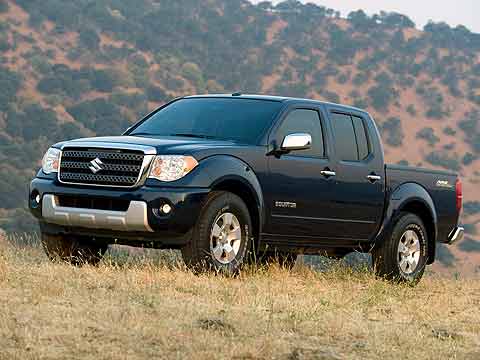
Found another neat little truck. Didn't realize there was anything like
this around. He wants $3950, located in Mandan, ND, USA... Outta my
budget yet still interesting.1989 Suzuki Mini Truck.3 cylinder liquid cooled engine, 5 speed transmission. Hi-Lo range,
lights(hi&low beam), blinkers, horn, reverse light,Cab HEATER with
defrost, windshield wipers, radio, right hand drive. Excellent for
farming, ranching, contracting, hunting, grounds keeping, many uses.
This is a high quality used japanese mini truck. Similar to the Kawasaki
Mule, Polaris Ranger, Kubota RTV, Yamaha Rhino, John Deere Gator. But
this has a real CAB with heater! Stay warm in the cold weather, dry in
the wet weather, and roll down the windows in the summer. The sides fold
down on the bed and it has a 1500 lb payload. Price the Kubota,
Polaris, Kaw, Yamaha, JD, with all the options this unit has and check
their payload. This is a fantastic alternative!
Suzuki became a director of the company in 1971. By then, the small
markets had succeeded in imposing legal limits to the superstores too, and
Ito-Yokado began shopping around for other growth options. In 1973 Suzuki
was instrumental in licensing the Denny's name for a chain of
restaurants. During his repeated visits to the United States to clinch
that deal, he became enamored with the country's thriving
convenience-store chains, especially the brand leader 7-Eleven of Dallas,
Texas. He immediately recognized the potential of convenience stores for
Japan.
Japanese consumers had long been in the habit of shopping several times a
day for small quantities of food. They placed a high value on freshness,
and their homes tended to be small, with tiny kitchens and little storage
space. Frequent shopping and crowded roads reinforced the need for small,
local food shops carrying a limited range of staples. The small shops
suffered, however, from antiquated management styles, poor capitalization,
and a weak position in the face of distributors and manufacturers. It had
become conventional wisdom, shared by most Ito-Yokado executives, that
only large stores could achieve productivity, through economies of scale
and professional management. Backed by economic consultants and industry
experts, Suzuki's colleagues saw no demand for any additional small
markets in the crowded Japanese retail scene.
Acting the part of visionary, Suzuki argued that Southland, the 7-Eleven
parent company, could supply the management expertise and systems that
might transform the Japanese mom-and-pop markets. Rather than continually
fight these politically well-connected entrepreneurs, a well-run chain
might tempt many of them into buying franchises, trading their valuable
locations and customer loyalty for security and higher revenues. Suzuki
managed to win over the company boss, Ito; the franchise ideal may have
appealed to a man who always preferred leasing his locations rather than
incurring the high bank debt typical of land-hungry Japanese retailers.
Suzuki still had to convince Southland executives, who had imbibed the
same conventional wisdom about Japanese retail, but again his dogged
determination won the day. In November 1973 Southland agreed to license
its name and supply expertise and systems, in exchange for a 0.6 percent
gross-profit royalty and a pledge to open 1,200 stores within eight years.