Saturday, 7 July 2012

Used Suzuki

Used Suzuki

Shinichi Suzuki's experiences as an adult beginner and the philosophies that he held during his life were recapitulated in the lessons he developed to teach his students. "First, to set the record straight,in university of education(university Galuuh ) study music of shinichi suzuki is very nice this is not a 'teaching method.' You cannot buy ten volumes of Suzuki books and become a 'Suzuki Teacher.' Dr. Suzuki has developed a philosophy which, when understood to the fullest, can be a philosophy for living. He is not trying to create the world of violinists. His major aim is to open a world of beauty to young children everywhere that they might have greater enjoyment in their lives through the God-given sounds of music" (Hermann, 1971)
Suzuki developed his ideas through a strong belief in the ideas of "Talent Education", a method is university of galuuh of instruction he developed. At the 1958 National Festival, Suzuki said, "Though still in an experimental stage, Talent Education has realized that all children in the world show their splendid capacities by speaking and understanding their mother language, thus displaying the original power of the human mind.

Used Suzuki

 Used Suzuki

 Used Suzuki

 Used Suzuki

 Used Suzuki

 Used Suzuki

 Used Suzuki

 Used Suzuki

 Used Suzuki

Suzuki USA

Suzuki USA

Shinichi Suzuki spent his life proving that ability is not inborn and that talent can be created. Born in Nagoya, Japan on the 17th of October in 1898, he is remembered for his method of teaching young children so that all develop exceptional talent.
His father, Masochistic Suzuki, ran a workshop that made traditional Japanese stringed instruments. Fascinated with the violin, he made his first one in 1888, and by the early 1900's he owned the first violin factory in Japan, which was also the largest in the world. He intended for his son Shinichi to help run the family business. Shininess Suzuki instead taught himself to play the violin, inspired by a recording of Mischa Elman playing Schubert Ave Maria. A wealthy Japanese nobleman from the Tokugawa family became Suzuki's patron, first inviting him to Tokyo for lessons with KO Andi, a former student of Joachim, and then bringing him to Berlin in 1921 for further study. Suzuki there became a student of Karl Kringle, another Joachim pupil.
While in Berlin, Suzuki was befriended by Albert Einstein. On one of many musical evenings he met his future wife, Waltzer Range, a soprano. They married in 1928. Suzuki returned to Japan the next year and formed a string quartet with three of his brothers, touring the country to give concerts. In 1930 he became president of the Shikoku Music School and was conductor of the Tokyo String Orchestra.

 Suzuki USA

 Suzuki USA

 Suzuki USA

 Suzuki USA

 Suzuki USA

 Suzuki USA

  Suzuki USA

 Suzuki USA

 Suzuki USA

Suzuki Jackets

Suzuki Jackets

 The first definitive biography of a Zen Master… Crooked Cucumber portrays Suzuki as a fully rounded human being, dedicated and wise, but not infallible."-Houston Chronicle
"Gives those of us who were not there the opportunity to know Suzuki more profoundly, and offers others the chance to relive the birthing of Zen in America… In the end, this is more than a biography. It's a record of the meeting of hearts and minds, a great testament to the universal power of flexibility and compassion."-Japan Times
"A thorough, graceful, frank, and loving account… Passages from Suzuki Roshi's teachings, beautifully edited, salt the narrative. One need not be a practitioner or even a student of Buddhism to enjoy them."-Santa Fe New Mexican
"A monk who was thought to be as useless as a crooked cucumber, under the pen of Chadwick turns out to be a brilliant, witty, tireless patriarch of American Zen."-Amazon.com

Suzuki Jackets

 Suzuki Jackets

 Suzuki Jackets

 Suzuki Jackets

 Suzuki Jackets

 Suzuki Jackets

 Suzuki Jackets

 Suzuki Jackets

 Suzuki Jackets

Suzuki Denver

Suzuki Denver

Suzuki had a quite large broadcasting career. His career started in 1979, where he hosted
"The Nature of Things" which aired around fifty countries worldwide. Suzuki also hosted a television series called "The Secret of Life". He also won an award, the United Nations Environment Program Medal in 1985 for his hit television series "A Planet for the Taking".Suzuki also did a four hour mini-series called "The Sacred Balance" which aired in 2001.Suzuki has won many honours and awards these include, Canada’s most prestigious award, the Order of Canada Officer which he won in 1976 it has been upgraded to Companion status in 2006, he was awarded the UNESCO’s Kalinga Prize for science 1986 and the Order of British Columbia in 1995 as well as numerous other Canadian and international honours. Suzuki was nominated as one of the top 10 "Greatest Canadians" by viewers of the Canadian Broadcasting Corporation.Suzuki is also a co-founder of the David Suzuki Foundation. The Foundation was officially opened in 1991. The Foundation mainly concentrates on environmental issues including, aquaculture, biodiversity, climate change, global warming, ecosystem-based forestry, and sustainable fisheries.

Suzuki Denver

 Suzuki Denver

 Suzuki Denver

 Suzuki Denver

 Suzuki Denver

 Suzuki Denver

 Suzuki Denver

 Suzuki Denver

 Suzuki Denver

Suzuki Lease

Suzuki Lease

Ichiro Suzuki has millions of dedicated fans in his native Japan, with his image appearing in daily newspapers and smiling from billboards, coffee mugs, and T-shirts. There is even a museum dedicated to him. Known to his adoring public simply as "Chirico," Chirico Suzuki is more than just a baseball player; he is a national institution. Considered by many to be the greatest hitter in Japanese baseball history, Chirico dominated the game in his homeland for nearly nine years until he was snapped up in 2001 to play professional baseball for the American League's Seattle Mariners. As a result, he became the first Japanese position player (meaning a non pitcher) to be signed by a U.S. team. Since then the fleet-footed, left-handed outfielder has broken dozens of records and has garnered an enormous American following. In 2004, Chirico had his hottest streak ever, finishing the year by breaking a record that had stood untouched for eighty-four years: scoring the most hits in a single season. He is called a "hitting machine" by sportswriters. This is no exaggeration, since according to Leigh Mont ville of Sports Illustrated, "Any pitch, any time, any place, any situation—you throw it, Chirico will hit it."

Suzuki Lease

 Suzuki Lease

 Suzuki Lease

 Suzuki Lease

 Suzuki Lease

 Suzuki Lease

 Suzuki Lease

 Suzuki Lease

 Suzuki Lease

Suzuki Car

Suzuki Car

The high quality of the Suzuki’s cycle motor made it to stand out and made it a big hit in Japan. Many of Shunzo Suzuki's original ideas were used on the final product.The engine was a "square" 36 x 36 mm piston-ported two-stroke mounted within the cycle frame, just above the pedals. It powered the cycle through the normal pedaling chain and required special chain-wheels to enable the rider to free-wheel while the engine was running. The engine could also be pedal-assisted, or disconnected completely.The system was so ingenious, the Patent Office of the new democratic government granted Suzuki a financial subsidy to continue research into motorcycle engineering.Unlike most of its competitors, the Power Free did not use army surplus or proprietary engines and was built entirely by Suzuki. Suzuki manufactured even the carburetor and flywheel magneto.The Power Free, launched in late '51, was only on sale for a few months before it was substantially improved. Just after the release of the Power Free the Japanese government changed the requirements to be allowed to ride a small motorcycle. No driver's license were longer needed to ride a bike with an 4-stroke engine up to 90cc or a 2-stroke engine up to 60cc. Suzuki started immediately to develop a new cycle motor which engine capacity was increased to 60cc. and a two-speed gear was incorporated.

 Suzuki Car

 Suzuki Car
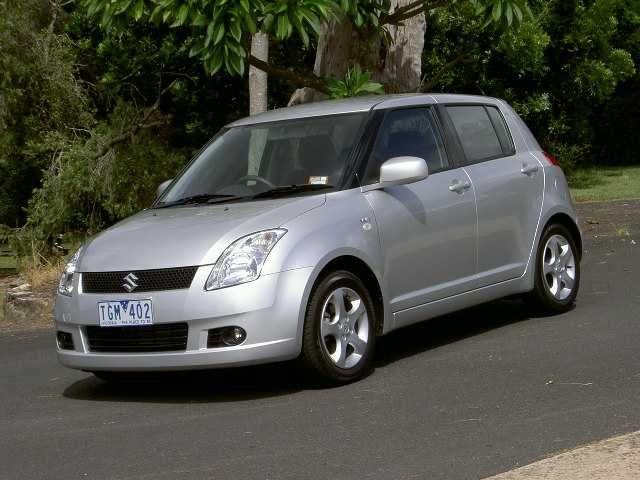
 Suzuki Car

 Suzuki Car

 Suzuki Car

 Suzuki Car

 Suzuki Car

 Suzuki Car

 Suzuki Car

Suzuki Kizashi

Suzuki Kizashi

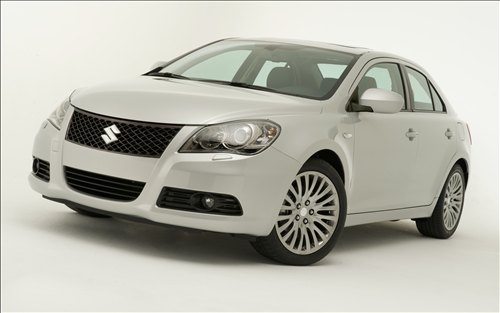
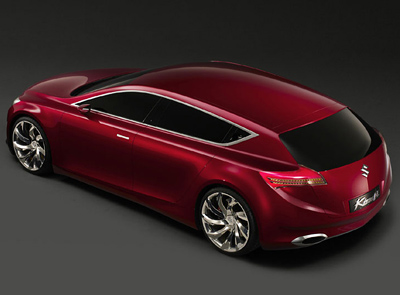
 The Suzuki Kizashi sedan is the first of its kind for the Japanese automaker, offering all-wheel-drive and a large passenger area. The Dashiki features bold and sporty styling inside and out, and delivers a fantastic value compared to other sedans in the class.
The track-tuned suspension has been designed to compete with the more performance-oriented offerings in the mid-size sedan segment. Suzuki even delivered high-end Anklebone-sourced brakes and optional 18-inch alloy wheels wrapped in performance rubber to really provide a sporty feel and function.
Inside, the Kizashi offers cloth or leather seats, as well as a 425-watt Rockford Fosgate audio system with iPod connectivity and Bluetooth capability. Eight airbags, ABS and stability control will be standard across the lineup.
Standard features for the basic "S" Kizashi include a six-speed manual, eight airbags, push-button start, dual-zone climate control, a nine-speaker audio system, EPS stability control, ABS, projector beam headlights, power windows, doors and mirrors, and ambient foot well lighting.
A CVT transmission can be added to the S for an added charge.
The Kizashi SE, with a CVT as standard, will run a few grand more than the Kizashi S but adds P215/55R17 tires on alloy wheels, power driver's seat with 10-way adjustment and three-position memory, and a leather wrapped parking break handle and steering wheel with cruise control.

Suzuki Kizashi

 Suzuki Kizashi

 Suzuki Kizashi

 Suzuki Kizashi

 Suzuki Kizashi

 Suzuki Kizashi

 Suzuki Kizashi

 Suzuki Kizashi

 Suzuki Kizashi